Baby Oil and Baking Soda: Discover the Surprising Uses of This Simple Homemade Mixture!..see more
Complete recipe — ingredients and instructions from all article pages.
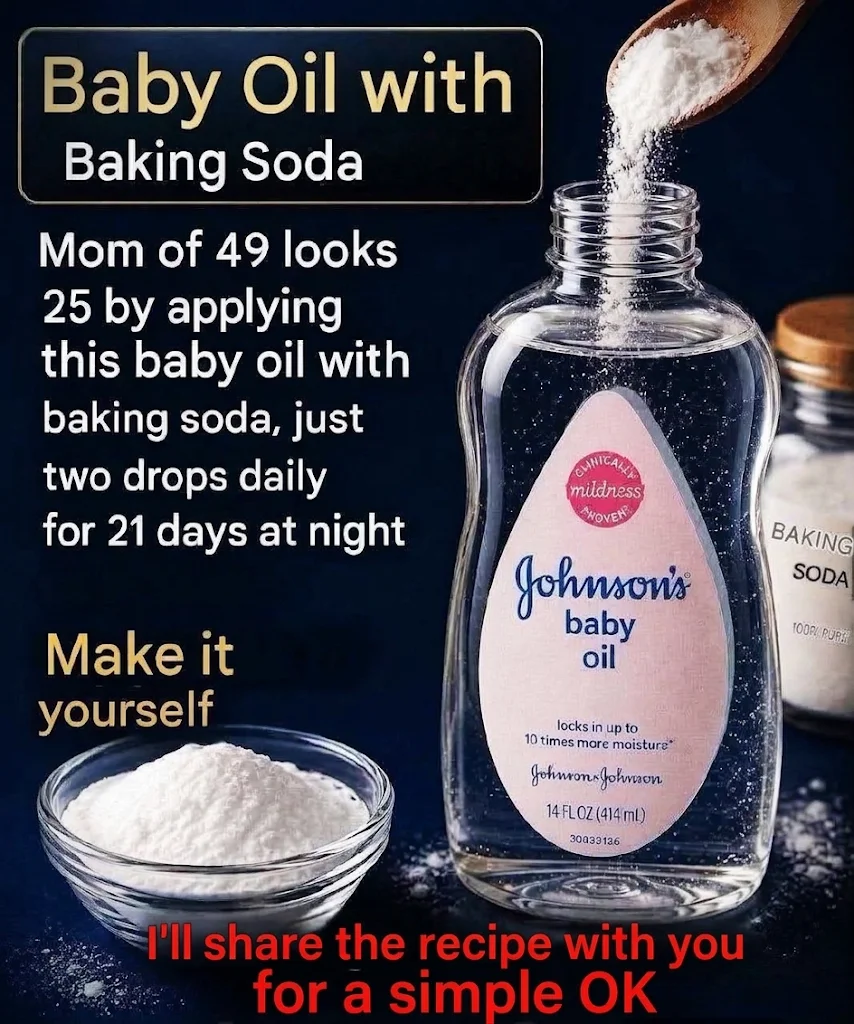
Baby Oil and Baking Soda: Why People Are Mixing These Two Household Ingredients, and What You Should Know!
What happens when you combine two inexpensive household products that many people already have at home? A surprising number of online beauty tips suggest that mixing baby oil with baking soda can create a simple homemade treatment for smoother, softer-looking skin.
The combination has attracted attention because baby oil is commonly used to help moisturize dry skin, while baking soda is often promoted online as a natural exfoliating ingredient.
But is this mixture really as effective as social media claims? Can it improve rough skin, remove dark spots, or make your complexion look brighter?
Before trying this popular combination, it is worth understanding how each ingredient works and why dermatologists recommend being cautious with homemade skin-care mixtures.
- Why Is Baby Oil Used in Skin Care?
Baby oil is generally a mineral-oil-based product designed to help reduce moisture loss from the skin.
Mineral oil forms a protective layer on the skin's surface, helping slow down water evaporation. This can be particularly useful when the skin feels dry after bathing.
Some people apply a small amount to their arms, legs, or other areas that need extra moisture.
Its main purpose is to help soften the skin and maintain hydration. However, baby oil does not contain a proven treatment for pigmentation, wrinkles, or other specific skin conditions.
- What Does Baking Soda Do?
Baking soda, also known as sodium bicarbonate, is a common kitchen ingredient.
Because it has a slightly abrasive texture, some homemade beauty recipes recommend using it as a physical exfoliant.
However, baking soda is alkaline, while healthy skin naturally has a slightly acidic surface environment.
Applying baking soda directly to the skin may interfere with its protective barrier, particularly when it is rubbed or used repeatedly.
Possible reactions include:
Dryness and tightness.
Redness and irritation.
Itching or discomfort.
Increased sensitivity.
Worsening of certain existing skin concerns.
For these reasons, baking soda is not generally recommended as a facial exfoliant.
- What Happens When You Mix Baby Oil and Baking Soda?
The idea behind this combination is that baby oil provides moisture while baking soda helps remove surface debris.
Although the mixture may feel oily and slightly gritty, there is no strong scientific evidence that combining these ingredients produces a special skin-care treatment.
Baby oil does not neutralize the potential irritation caused by baking soda.
In fact, rubbing an abrasive mixture against delicate facial skin can cause unnecessary irritation, especially around the eyes and other sensitive areas.
The combination should not be considered a proven treatment for dark spots, acne, scars, or wrinkles.
- Can This Mixture Remove Dark Spots?
One of the most common claims associated with homemade beauty recipes is that they can make dark patches disappear.
However, pigmentation develops for different reasons, including sun exposure, hormonal changes, acne, and inflammation.
Baking soda does not reliably regulate melanin production or treat the underlying causes of hyperpigmentation.
Aggressive scrubbing may actually make certain dark marks more noticeable by irritating the skin.
If your goal is to improve uneven skin tone, ingredients such as niacinamide, vitamin C, or azelaic acid may be more appropriate, depending on your skin type and the cause of the discoloration.
Daily broad-spectrum sunscreen with SPF 30 or higher is also an important part of managing pigmentation.
- Better Ways to Use These Products
You do not need to combine every household product to benefit from it.
For dry skin: Baby oil can be applied sparingly to damp skin to help reduce moisture loss. Choose a product suitable for your skin and stop using it if irritation develops.
For gentle exfoliation: Consider a facial exfoliating product specifically formulated for your skin type rather than using baking soda. Some products contain carefully formulated exfoliating acids, such as lactic acid or salicylic acid.
For facial hydration: A fragrance-free moisturizer containing ingredients such as glycerin or ceramides can help support the skin barrier.
For uneven pigmentation: Use sun protection consistently and consider discussing suitable active ingredients with a dermatologist.
- Who Should Be Especially Careful?
People with sensitive skin, eczema, rosacea, or an already irritated skin barrier should be particularly cautious about homemade mixtures.
Avoid applying baking soda mixtures to:
The face and area around the eyes.
Broken or irritated skin.
Areas affected by eczema or other inflammatory conditions.
Skin that has recently undergone exfoliation or cosmetic treatment.
If a product causes burning, redness, or persistent discomfort, stop using it and rinse the area gently with water.
Final Thoughts
Baby oil and baking soda may seem like an unusual but inexpensive beauty combination, which helps explain why the idea continues to circulate online.
However, the two ingredients do not automatically become more effective when mixed together. Baby oil can help reduce moisture loss, while baking soda may irritate the skin because of its alkaline nature and abrasive texture.
If you want softer, healthier-looking skin, a gentle moisturizer and a suitable skin-care routine are more reliable choices than experimenting with potentially irritating mixtures.
Sometimes, the best beauty advice is not about mixing more ingredients together, but about understanding what your skin actually needs.
Discover more delicious Recipes or the tips on our website! > https://mealhouse.zed12.com
Rarle USA · https://mealhouse.zed12.com/baby-oil-and-baking-soda-discover-the-surprising-uses-of-this-simple-homemade-mixture-see-more/