
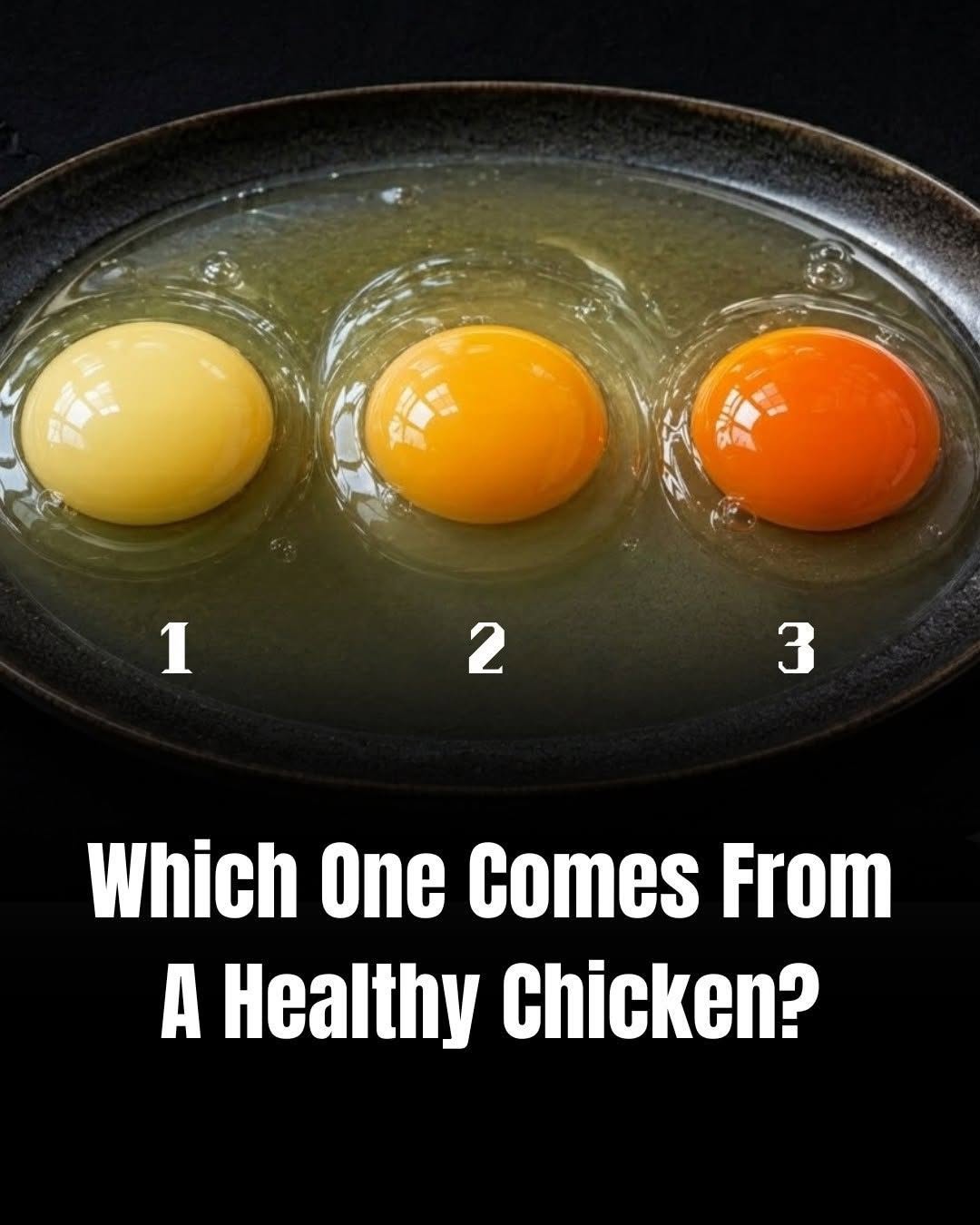
Not all eggs look exactly the same. Some have pale yellow yolks, others have deep orange centers, and some eggs may have shells in completely different shades.
But here’s an interesting question: Can you tell which egg came from the healthiest chicken just by looking at it?
Imagine you’re presented with three eggs. Each one looks slightly different, and you must choose the one that supposedly came from the healthiest hen.
Would you pick number 1, 2, or 3?
Before revealing the answer, let’s explore what actually makes an egg nutritious and what its appearance can tell us.
What Makes an Egg Healthy?
Eggs are naturally rich in several important nutrients, including:
High-quality protein.
Vitamin B12.
Vitamin D.
Choline.
Selenium.
Vitamin A.
Essential fatty acids.
These nutrients contribute to normal muscle function, brain health, metabolism, and other important bodily processes.
However, the nutritional value of an egg depends on several factors, including the hen’s diet and living conditions.
Does the Color of the Egg Yolk Matter?
One of the biggest differences people notice between eggs is the color of the yolk.
Some yolks are pale yellow, while others are dark yellow or orange.
This difference is largely influenced by the pigments in the hen’s diet.
For example, feed containing certain plant pigments, such as carotenoids, can produce more intensely colored yolks.
But here’s something important:
A darker orange yolk does not automatically mean the egg is healthier or more nutritious.
A pale yolk can also come from a healthy hen.
Does the Eggshell Color Tell You Anything?
Eggshells can be white, brown, blue, or even greenish, depending mainly on the hen’s breed.
The shell color does not reliably indicate the egg’s nutritional quality.
A brown egg is not automatically healthier than a white egg, and the same applies to other shell colors.
What About the Hen’s Diet?
A hen’s diet can influence the nutritional composition of its eggs.
Depending on the feed, eggs may differ in certain nutrients, including omega-3 fatty acids and some vitamins.
Hens raised with access to outdoor environments may also have different dietary exposures.
Nevertheless, appearance alone cannot establish the overall health of the hen or the nutritional superiority of an individual egg.
So, Which Egg Should You Choose?
<escape>🥚</escape> The surprising answer: You cannot reliably identify the healthiest chicken by choosing egg number 1, 2, or 3 based only on appearance.
Yolk color, shell color, and egg size are not reliable tests of a hen’s overall health.
To make a better choice, consider the egg’s freshness, safe handling, production information, and nutritional labeling when available.
Final Thoughts
Eggs are an excellent source of protein and several essential nutrients, regardless of whether their yolks are pale or dark.
Although different eggs may have different nutritional characteristics, their appearance alone cannot tell you which hen was healthiest.
Now it’s your turn: Did you choose 1, 2, or 3 before reading the answer? Share your choice!






Comments