
Have you ever heard that something as simple as looking at your fingers could reveal clues about your health? Your hands can sometimes provide valuable information about what’s happening inside your body, and certain changes in your fingers or fingernails may deserve medical attention.
One examination that has attracted attention is the finger clubbing test, a simple observation doctors use to identify changes in the shape of the fingertips and nails.
Although it is painless and easy to observe, this examination can sometimes reveal signs associated with underlying medical conditions.
Here’s what you should know about the finger test, how it works, and when changes in your hands should not be ignored.
What Is the Finger Clubbing Test?
Finger clubbing is a physical change in which the fingertips become enlarged and the nails develop a more curved appearance.
Doctors can identify this condition during a physical examination by observing the shape of the fingers and nails.
Unlike ordinary nail growth, clubbing involves changes in the tissues around the nail bed and fingertip.
It is not a diagnosis by itself. Instead, it can sometimes serve as a clue that an underlying medical condition needs further investigation.
How Does the Simple Finger Test Work?
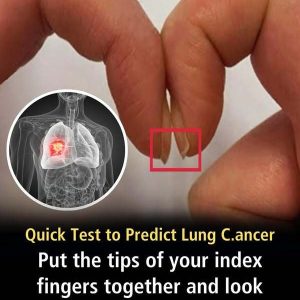
One commonly discussed examination is called the Schamroth sign.
It involves placing the corresponding fingernails of both index fingers against each other.
In a typical normal result, a small diamond-shaped gap appears between the nail beds when the fingers are positioned correctly.
In people with established finger clubbing, this small gap may disappear.
However, this observation alone cannot diagnose a disease or determine whether someone is healthy.
The test is only one clinical clue that healthcare professionals may consider alongside other findings.
What Health Conditions Can Be Associated With Finger Clubbing?
Finger clubbing has been associated with several medical conditions, particularly those affecting the lungs, heart, and digestive system.
- Lung Diseases
Some lung conditions can be associated with clubbing, including:
Lung cancer.
Bronchiectasis.
Certain forms of pulmonary fibrosis.
Some chronic lung infections.
Clubbing is not present in everyone with these conditions, and most people with clubbing do not necessarily have lung cancer.
- Heart Conditions
Certain congenital heart conditions and diseases associated with reduced oxygen delivery or abnormal circulation can also be associated with clubbing.
A healthcare professional may investigate additional symptoms and medical history to determine whether further examination is necessary.
- Digestive and Liver Diseases
Finger clubbing can sometimes occur alongside certain gastrointestinal and liver conditions, including:
Inflammatory bowel disease.
Some chronic liver diseases.
Certain intestinal disorders.
The relationship depends on the specific condition and its underlying mechanisms.
Other Changes in Your Fingers Worth Paying Attention To
Clubbing is not the only change in your hands that may provide clues about your health.
Other findings can sometimes deserve medical evaluation.
Unusual Nail Changes
Changes in nail color, shape, thickness, or growth may occasionally be associated with medical conditions.
However, nail changes can also result from injuries, infections, nutritional factors, or ordinary variations.
Persistent Finger Swelling
Swollen fingers may have several possible causes, including inflammation, injury, or joint conditions.
Persistent swelling, particularly when accompanied by pain or stiffness, should be evaluated.
Blue or Gray Fingertips
A blue or gray discoloration of the fingers can sometimes indicate problems with circulation or oxygen delivery.
If this occurs suddenly or is accompanied by breathing difficulties, chest pain, confusion, or other serious symptoms, seek emergency medical attention.
Can You Diagnose Serious Diseases at Home Using This Test?
The short answer is no.
Although the Schamroth sign is a useful clinical observation, it is not a reliable standalone screening test for serious diseases.
A normal-looking result does not rule out lung disease, heart disease, or other medical conditions.
Likewise, the absence of a diamond-shaped gap does not automatically mean that someone has a dangerous illness.
Doctors use physical examinations, medical history, and appropriate investigations to establish a diagnosis.
When Should You See a Doctor?
Consider arranging a medical evaluation if you notice:
New or progressive changes in the shape of your fingertips.
Unusual curvature of your fingernails.
Persistent swelling or discomfort in your fingers.
Nail changes accompanied by unexplained respiratory symptoms.
Persistent coughing or unexplained shortness of breath.
New finger clubbing deserves medical evaluation, even when you feel otherwise well.
Final Thoughts
Your fingers and fingernails can sometimes provide useful clues about your health, and the Schamroth sign is one simple examination doctors may use when evaluating possible finger clubbing.
But remember: A finger test cannot diagnose or rule out serious health conditions on its own.
If you notice unusual changes in your fingertips or nails, the safest approach is to consult a healthcare professional rather than relying on an online test.
Sometimes, paying attention to small changes in your body can help you recognize when something deserves a closer look.



Comments